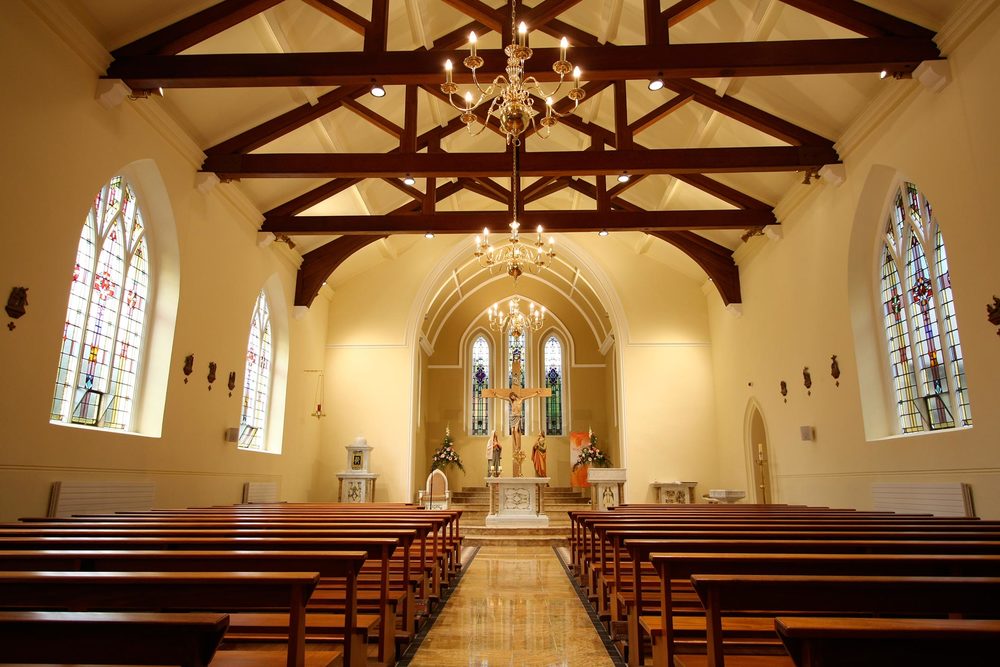
A little bit of history.

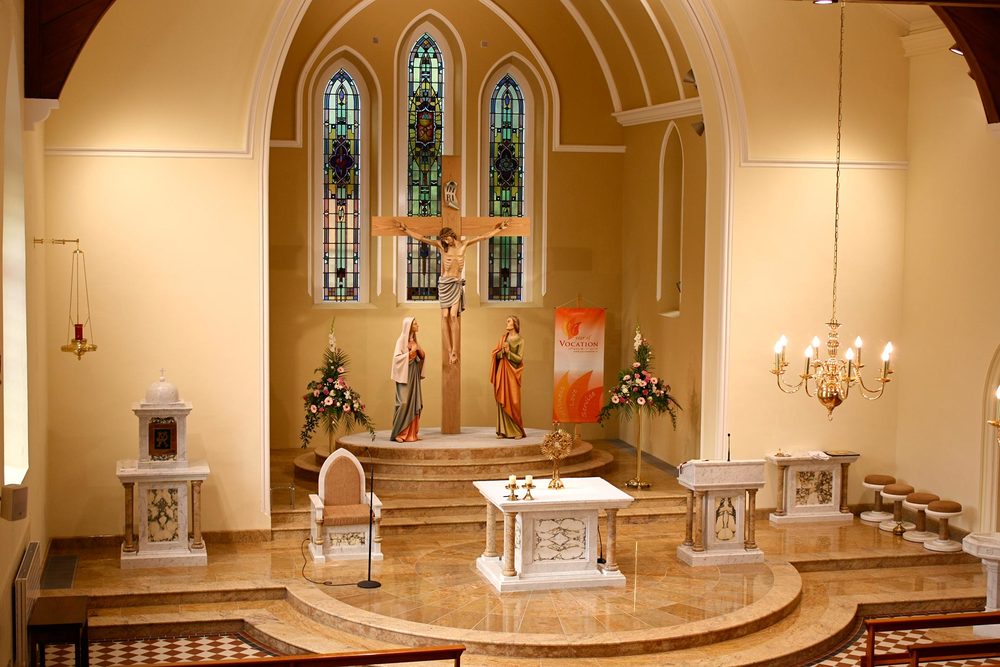
Pobal in Irish means people, and in this name some would see a memory of crowds who gathered to hear the preaching of Patrick. The name Tempo comes from the Irish An tIompu Deiseal – ‘the turn to the right’. Again there are tales of Patrick and why he turned at this place. But the scholar Joyce in his work on placenames sees an older religious tradition behind this name, finding in it an echo of sun-worship rites. It is notable that the custom of praying while walking in clockwise circles (turning always right, the direction of the sun) still survives in traditional prayer patterns at Lough Derg and in other places.
Certainly there is strong evidence of early settlement in the area with at least fifteen megalithic sites still visible in the upland areas of Pobal Parish, of which the best know is the ruined cairn on Topped Mountain.
As a parish, Pobal can trace its origins back to monastic roots through the earlier parishes of Inniskeen, Derryvollen and Derrybrusk, which was known in the 16th century as Pobal Phadraig. The medieval church site was in Pubble townland, where the traditional herenachs were the Owens family, bound to keep the church in repair and to pay a rent to the Bishop of Clogher. This site was still used by the Church of Ireland until the end of the 18th century.
From penal times there remain memories of several mass sites. One of the earliest massrocks recorded in Clogher Diocese was in use on Glen Mountain in 1613. Mullinaskea was another location, and in Ballylucas there was a mass garden where foundations of the little chapel which was built there as times improved are still pointed out, known now as Chapel Park.
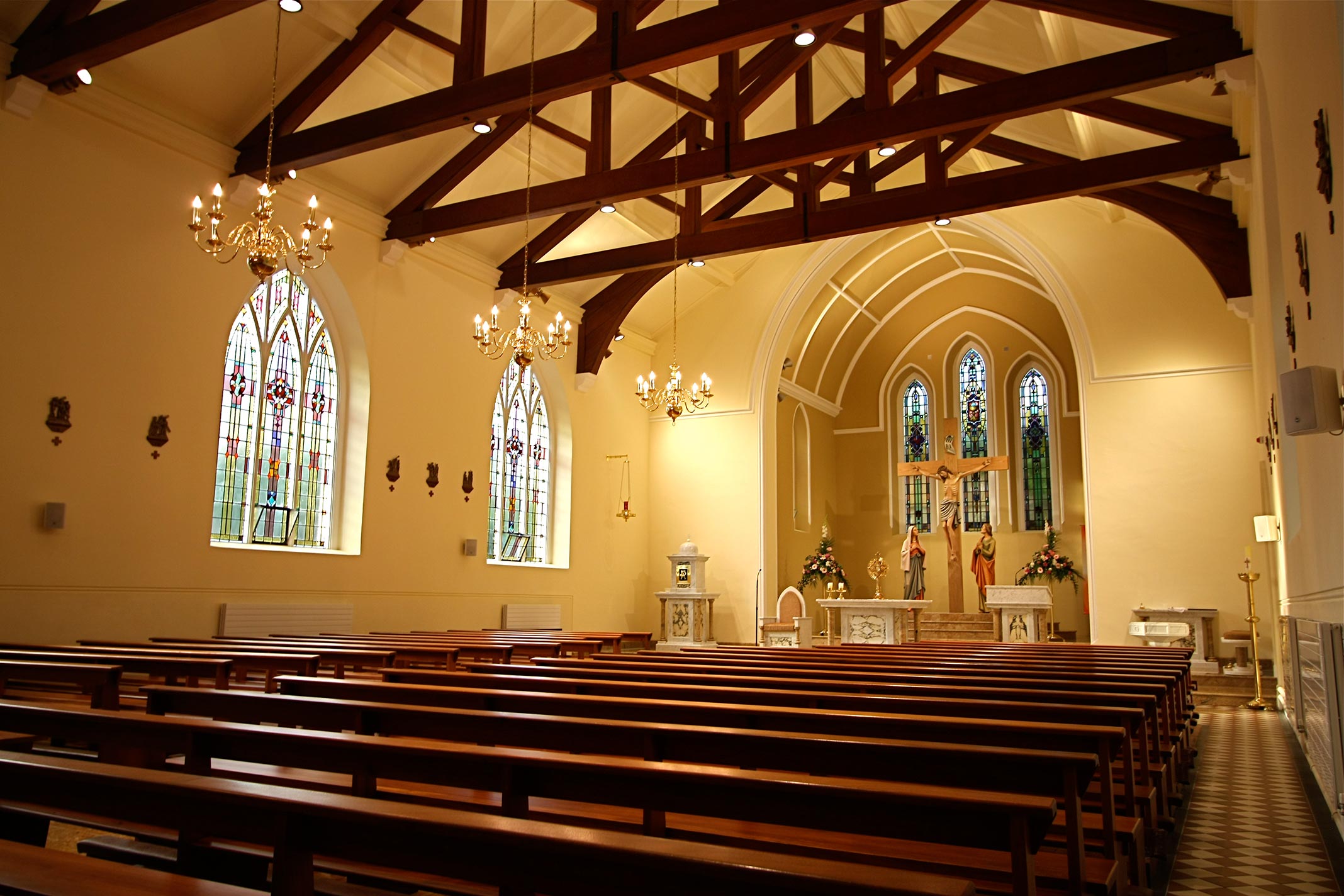
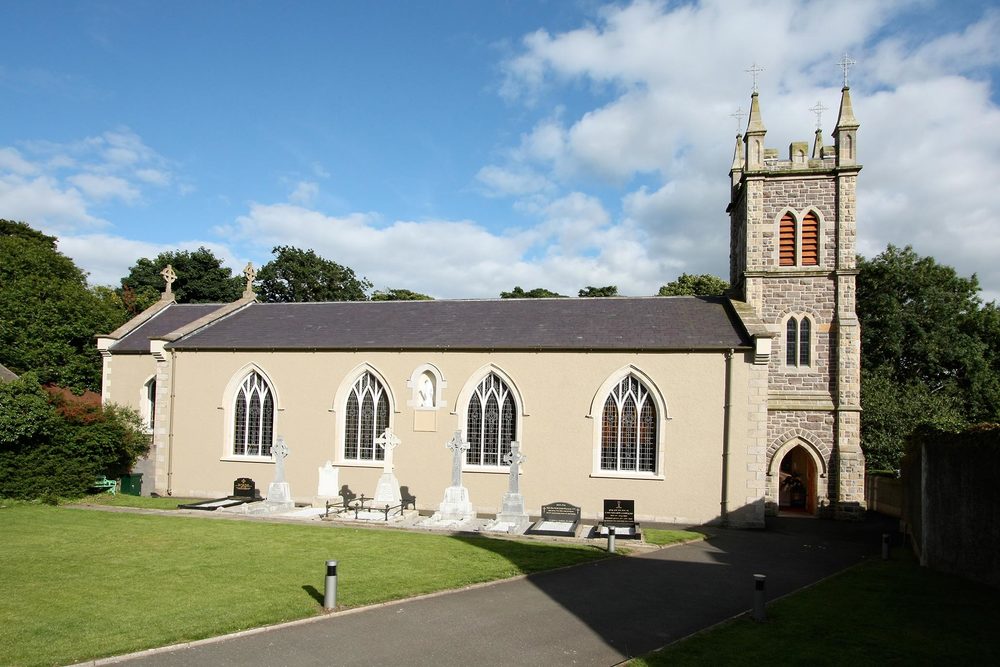
The present Catholic church in Tempo village was built on land given by the local landlord, Hugh Maguire. The foundation stone was laid by Bishop Kernan on 19 May 1826. The builder was a John Maguire and the work was overseen by the parish priest of the time, James Kelly. Cradien church was also built on a site donated by a landlord, this time the Earl of Belmore. On this site, a Lissan, for most of the 19th century a long, low, thatched masshouse with a stable served the Catholic people of this area, then in Enniskillen Parish. In 1890 the landlord extended the site and Archdeacon Smollen carried out the building of the present St.Joseph’s. The Cradien area was transferred to Pobal Parish in 1980 and the church was renovated over the following years.
Settlement and resettlement over the centuries leaves Pobal today with a population of over 2600, about half of which is Catholic. Improved relations between the various Christian congregations in more recent times are reflected in different cross-community initiatives like the Tempo Development Association which concerns itself with the physical environment around Tempo Village. Topped Mountain Historical Society and the History and Education Centre at Dooneen promote awareness and appreciation of a shared cultural heritage. Presently housed in the old Catholic school at Dooneen, the latter looks forward to moving into purpose-built premises as the new millennium begins.